
From Backlash to Recovery: Effective Social Media Crisis Management Strategies
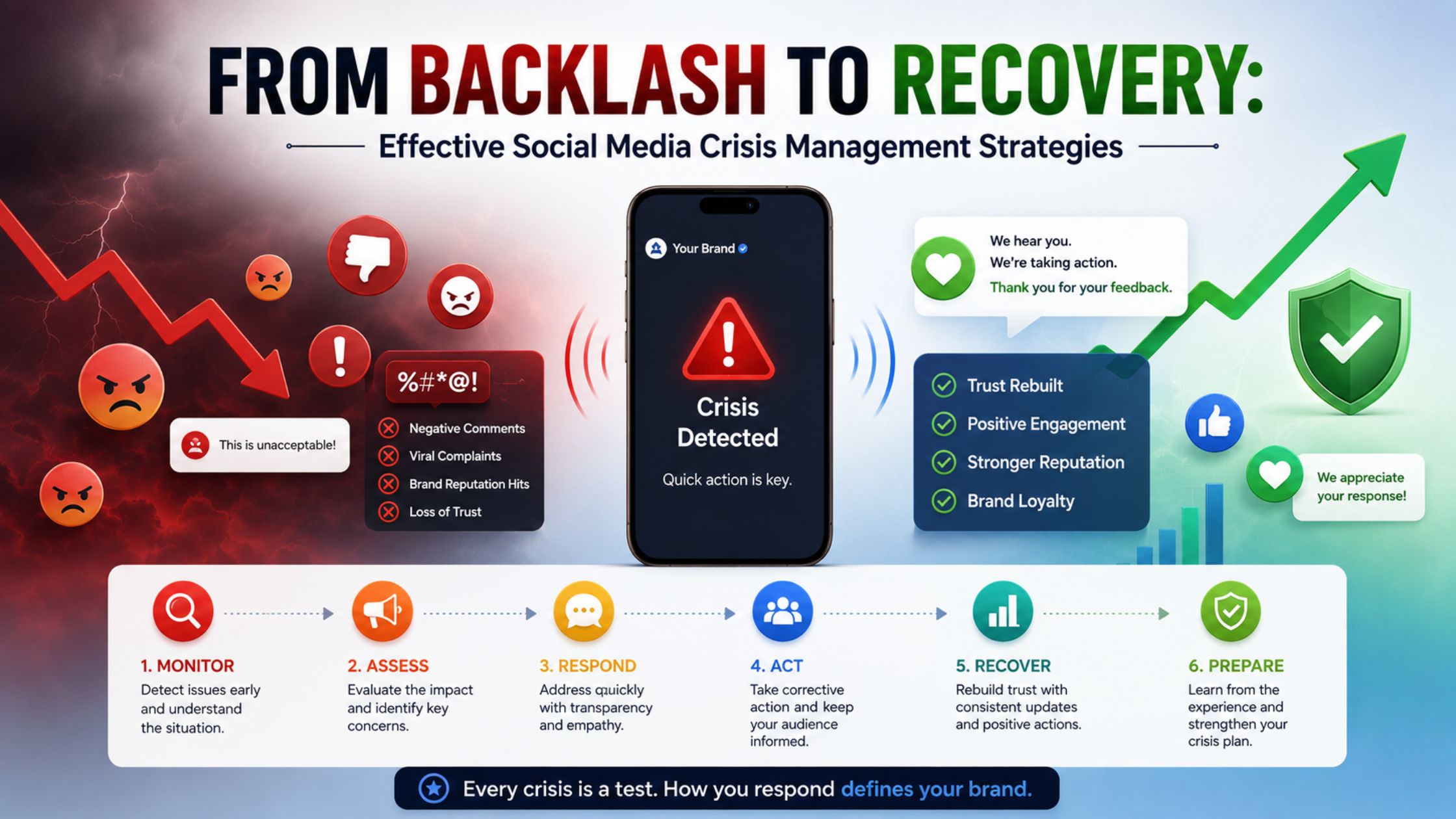
In today’s quick digital world, social media can be both helpful and harmful for businesses. One moment, a popular post can make your brand really famous; the next, it can cause a lot of bad comments and reviews. Since people can share their thoughts quickly and easily, it’s important to know how to handle these situations. A small mistake can start a social media problem that could harm your reputation and your business financially. This is why having effective social media crisis management strategies in place is essential for protecting your brand and responding to challenges before they escalate.
So how do you turn potential backlash into an opportunity for recovery? The answer lies in effective social media crisis management strategies. This guide will walk you through the essentials of managing crises with confidence and transparency while helping you rebuild trust with your audience when the dust settles. It’s time to take control and ensure that a setback today doesn’t spell disaster tomorrow.
The Power of Social Media in Today’s Business World
Social media has transformed the business landscape, providing a platform that connects brands with consumers like never before. It allows for real-time communication and engagement, breaking down barriers between companies and their audiences.
With billions of users worldwide, social media serves as a powerful marketing tool. Businesses can reach targeted demographics quickly and efficiently through tailored content strategies.
Moreover, customer feedback is instantaneous; companies receive insights into consumer preferences almost immediately. This feedback loop enables businesses to adapt their offerings in ways traditional methods simply cannot match.
The viral nature of social platforms means that positive stories spread rapidly while negative ones can do so just as fast. Understanding this dynamic is essential for any brand looking to thrive today. Embracing the power of social media isn’t optional—it’s critical for survival in today’s competitive marketplace.
Understanding Social Media Crisis
A social media crisis can strike unexpectedly, leaving brands scrambling for solutions. It involves situations that generate negative attention or backlash online, often spiraling out of control quickly.
Understanding the nuances is crucial. These crises may stem from a single tweet gone wrong or a poorly timed marketing campaign. The speed at which information spreads on platforms like Twitter and Facebook amplifies the impact.
Moreover, emotions run high during these incidents. Customers feel betrayed or angry, and their voices amplify across networks. This reaction can lead to viral outrage that damages brand reputation rapidly.
Recognizing the potential triggers—such as miscommunication or cultural insensitivity—is essential in navigating these turbulent waters effectively. Brands must be prepared to respond swiftly and thoughtfully when such challenges arise to mitigate damage and maintain customer trust.
Common Triggers for Social Media Backlash
Social media backlash can strike unexpectedly and often catches brands off guard. Understanding the common triggers helps in preparing for potential pitfalls.
One major trigger is insensitive content. A poorly thought-out post can quickly ignite outrage, especially if it touches on sensitive social issues or cultural taboos.
Another frequent cause is customer service failures. When consumers feel ignored or mistreated online, they take to social platforms to voice their grievances, amplifying dissatisfaction among others.
Transparency lapses also lead to backlash. Brands that fail to address mistakes openly risk losing credibility with their audience.
Inconsistent messaging can confuse followers and spark criticism as well. When a brand’s actions don’t align with its stated values, this disconnect often leads to public outcry.
Celebrity endorsements gone wrong may backfire when an influencer’s behavior contradicts the brand’s image or ethos, stirring controversy and negative sentiment from fans and consumers alike.
The Importance of Having a Crisis Management Plan
A crisis management plan is vital for any business navigating the unpredictable waters of social media. It serves as a roadmap, guiding your team through turbulent times with clarity and purpose.
When a backlash occurs, having predefined protocols ensures swift action. This minimizes confusion among employees and communicates decisively to your audience.
Without a plan in place, businesses often flounder under pressure. They may miss crucial opportunities to address issues promptly. A well-structured response can turn potential disasters into moments of connection with customers.
Moreover, a crisis management strategy helps build resilience within an organization. Teams become better equipped to handle future challenges, learning from past experiences while fostering trust and loyalty among stakeholders.
Investing time in developing this plan pays off significantly. The peace of mind it offers allows businesses to focus on growth rather than fear of unforeseen incidents that could harm their reputation.
Effective Strategies for Managing a Social Media Crisis
When facing a social media crisis, swift action is crucial. Start by acknowledging the issue publicly. Silence can be interpreted as indifference.
Next, gather your team to assess the situation. Understanding the root cause helps in crafting an appropriate response. Transparency goes a long way; share what you know and what you’re doing about it.
Develop clear messaging tailored for different platforms. Each channel has its nuances, so adapt your tone accordingly while maintaining consistent core messages.
Engage with your audience directly and compassionately. Respond to concerns promptly, showing that you value their opinions and feedback.
Monitor conversations continuously to gauge public sentiment. This real-time insight allows for adjustments in strategy if needed.
Consider involving third-party experts or influencers who resonate with your audience for added credibility and support during recovery efforts.
Rebuilding Trust and Reputation After a Social Media Crisis
Rebuilding trust after a social media crisis is a delicate process. It requires consistent effort and genuine engagement with your audience.
Start by acknowledging the missteps openly. Transparency can go a long way in regaining lost credibility. People appreciate honesty, especially when mistakes are made.
Next, prioritize communication. Use various platforms to share updates about steps taken to rectify the situation. Be proactive rather than reactive.
Engage directly with your audience through Q&A sessions or live chats. This allows them to voice their concerns while showing that you care about their opinions.
Implement changes based on feedback received during this time. Demonstrating that you’re listening will help mend relationships further.
Showcase positive stories and testimonials from satisfied customers post-crisis. Highlighting these successes reinforces your commitment to improvement and builds confidence in your brand again.
Conclusion
Navigating the turbulent waters of social media can be daunting. Businesses must understand that a crisis is not just an unfortunate event; it’s an opportunity for growth and improvement. The power of social media in today’s business world means that a single misstep can attract significant backlash, but with effective social media crisis management strategies, companies can turn adversity into strength.
By recognizing common triggers for crises and having a robust plan in place, organizations can respond swiftly and transparently. Engaging authentically during difficult times helps rebuild trust and reputation among customers. It’s essential to embrace the lessons learned from each experience to enhance future responses.
In today’s quickly changing digital world, being flexible is very important. As companies work to build real connections with their audience, being ready for possible problems helps them become stronger and more able to handle tough situations. By handling social media crises properly, businesses can not only stay afloat but also grow and succeed even when things get difficult.
 Previous post
Choose a Right Website Developer
Previous post
Choose a Right Website Developer