
Agent Autonomy Unlocked: A Look Inside Rovo’s AI Architecture
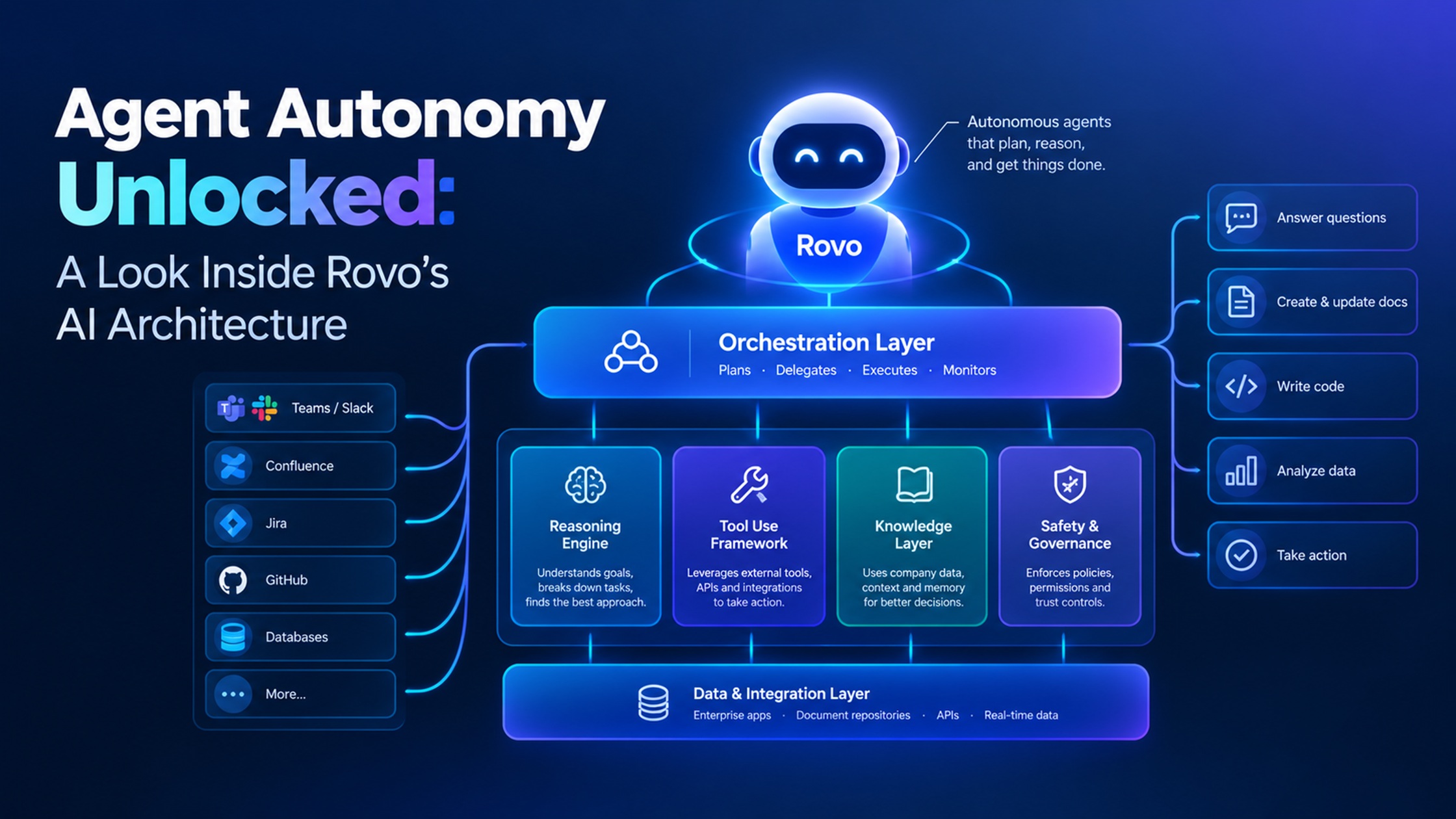
In a world where artificial intelligence is reshaping the landscape of business, Rovo stands out as a pioneering force. With an innovative AI-based approach, Rovo is unlocking new potentials for companies aiming to enhance efficiency and drive growth. Central to this transformation is the concept of agent autonomy—a game changer that empowers AI systems to operate independently. As we dive into Rovo’s AI architecture, we will explore how it fosters this autonomy and what it means for businesses navigating the complexities of today’s marketplace. Prepare to discover how cutting-edge technology can revolutionize your operations and unlock untapped potential!
Understanding Agent Autonomy In The Context of AI
Agent autonomy refers to the ability of AI systems to operate independently, making decisions and taking actions without constant human oversight. This is a significant shift from traditional models where human input was essential at every stage.
In the context of AI, agent autonomy enhances efficiency and responsiveness. Autonomous agents can analyze vast datasets in real-time, identifying patterns that may elude human analysts. By doing so, they make informed decisions swiftly.
Moreover, this independence allows organizations to scale operations seamlessly. Agents can handle repetitive tasks or complex problem-solving scenarios around the clock.
The integration of machine learning algorithms further empowers these autonomous agents. They continuously learn from their experiences, adapting their strategies over time for improved performance.
Understanding agent autonomy sheds light on how businesses harness technology’s potential while fostering innovation and agility in dynamic environments.
How Rovo’s AI Architecture Allows For Agent Autonomy
Rovo’s AI architecture is a game-changer when it comes to enabling agent autonomy. At its core, this architecture leverages advanced machine learning algorithms and neural networks. This allows agents to learn from vast datasets without constant human intervention.
The system is designed with adaptability in mind. Agents can analyze changing environments and adjust their actions accordingly. They don’t just follow pre-defined rules; they make decisions based on real-time data.
Moreover, Rovo incorporates natural language processing. This lets agents understand context and nuances in conversations, enhancing user interaction significantly.
With robust feedback loops built into the framework, the AI continually improves itself over time. It learns from every interaction, becoming smarter with each task undertaken.
This self-sufficiency drives efficiency across various business operations while minimizing oversight demands on human staff members.
Benefits of Agent Autonomy for Businesses
Agent autonomy offers businesses a range of advantages. First, it enhances efficiency. Autonomous agents can execute tasks without constant oversight, freeing up human resources for more strategic initiatives.
There’s significant cost reduction. By automating routine processes, companies save on labor costs and minimize errors that often lead to expensive fixes.
Moreover, autonomous agents make decisions based on real-time data analysis. This leads to quicker responses in dynamic market conditions. Businesses can adapt rapidly and stay competitive.
Additionally, customer service improves dramatically with agent autonomy. AI-driven systems provide personalized experiences around the clock while maintaining consistency across interactions.
This technology fosters innovation by allowing teams to focus on developing new strategies rather than getting bogged down in day-to-day operations. Embracing agent autonomy sets a foundation for growth and adaptability in an ever-changing business landscape.
Real-life Examples of Successful Implementation
Rovo’s AI architecture is making waves across various industries. One notable example comes from the retail sector, where a major chain deployed Rovo’s system to optimize inventory management. The result? Improved stock accuracy and reduced waste.
In healthcare, a hospital integrated Rovo’s technology to streamline patient scheduling. This not only enhanced patient experience but also boosted staff efficiency by minimizing administrative tasks.
Another success story emerged in logistics. A shipping company utilized Rovo’s AI to enhance route planning. With real-time data analysis, they significantly cut delivery times while lowering fuel costs.
These implementations showcase how versatile Rovo’s AI architecture can be, adapting to different needs and environments seamlessly. Each case highlights tangible benefits that extend beyond mere automation; they illustrate a shift toward smarter decision-making powered by artificial intelligence.
Potential Challenges And How Rovo Addresses Them
Agent autonomy comes with its own set of challenges. One major concern is data privacy. With AI systems processing vast amounts of information, businesses worry about securing sensitive data.
Rovo tackles this head-on by implementing robust encryption methods. This ensures that user data remains confidential and protected from breaches.
Another challenge is the potential for misinterpretation of commands or scenarios. Rovo’s architecture includes advanced natural language processing capabilities, enabling agents to understand context better than ever before.
This minimizes errors in execution and enhances communication between users and AI.
Additionally, integrating autonomous agents into existing workflows can be daunting for some companies. Rovo provides tailored onboarding solutions to help organizations adapt smoothly while maximizing efficiency right from the start.
Through these strategies, Rovo addresses potential pitfalls effectively, allowing businesses to harness the full power of agent autonomy without unnecessary risks or complications.
Future Advancements in Agent Autonomy Technology
The landscape of Agent Autonomy technology is constantly evolving. As AI research progresses, we can expect remarkable innovations that enhance decision-making capabilities.
Next-generation algorithms will empower agents to learn more effectively from their environment. This adaptive learning will enable them to handle complex tasks with minimal human intervention.
Integration with emerging technologies like quantum computing could revolutionize processing speeds. Imagine agents making real-time decisions based on vast datasets analyzed instantaneously.
Furthermore, advancements in natural language processing will improve communication between humans and autonomous systems. Enhanced understanding of context and intent can lead to even more seamless interactions.
Ethical considerations are also at the forefront of development efforts. Fostering responsible AI practices ensures these systems remain beneficial and trustworthy for businesses and society alike.
As these advancements unfold, they promise not only greater efficiency but also a transformative impact on how organizations operate in an increasingly automated world.
Conclusion: Why Agent Autonomy is the Future of AI In Business
The landscape of business is rapidly evolving, and the integration of AI technology like Rovo’s AI Architecture is at the forefront of this transformation. Agent autonomy represents a significant leap toward greater efficiency, flexibility, and innovation in various sectors.
As companies increasingly adopt autonomous agents powered by advanced AI systems, they unlock new potential for growth and customer satisfaction. The ability for these agents to operate independently leads to faster decision-making processes and improved responsiveness to market changes.
Rovo’s approach allows businesses not just to keep pace with industry demands but also to set themselves apart from competitors. By automating routine tasks while maintaining high levels of customization and human oversight, firms can focus on strategic initiatives that drive success.
Moreover, as challenges emerge—be it ethical considerations or technical hurdles—Rovo’s continuous refinement ensures that their architecture remains robust. This adaptability paves the way for future advancements in agent autonomy technologies.
Embracing this evolution means embracing a future where intelligent collaboration between humans and machines becomes standard practice. Agent autonomy isn’t just a trend; it’s an essential component shaping the next era of business strategy. As organizations harness Rovo’s innovative solutions today, they prepare themselves for tomorrow’s opportunities in an ever-changing digital landscape.
 Previous post
Choose a Right Website Developer
Previous post
Choose a Right Website Developer