
The Missing Piece in B2B Marketing? Seamless CRM Integration
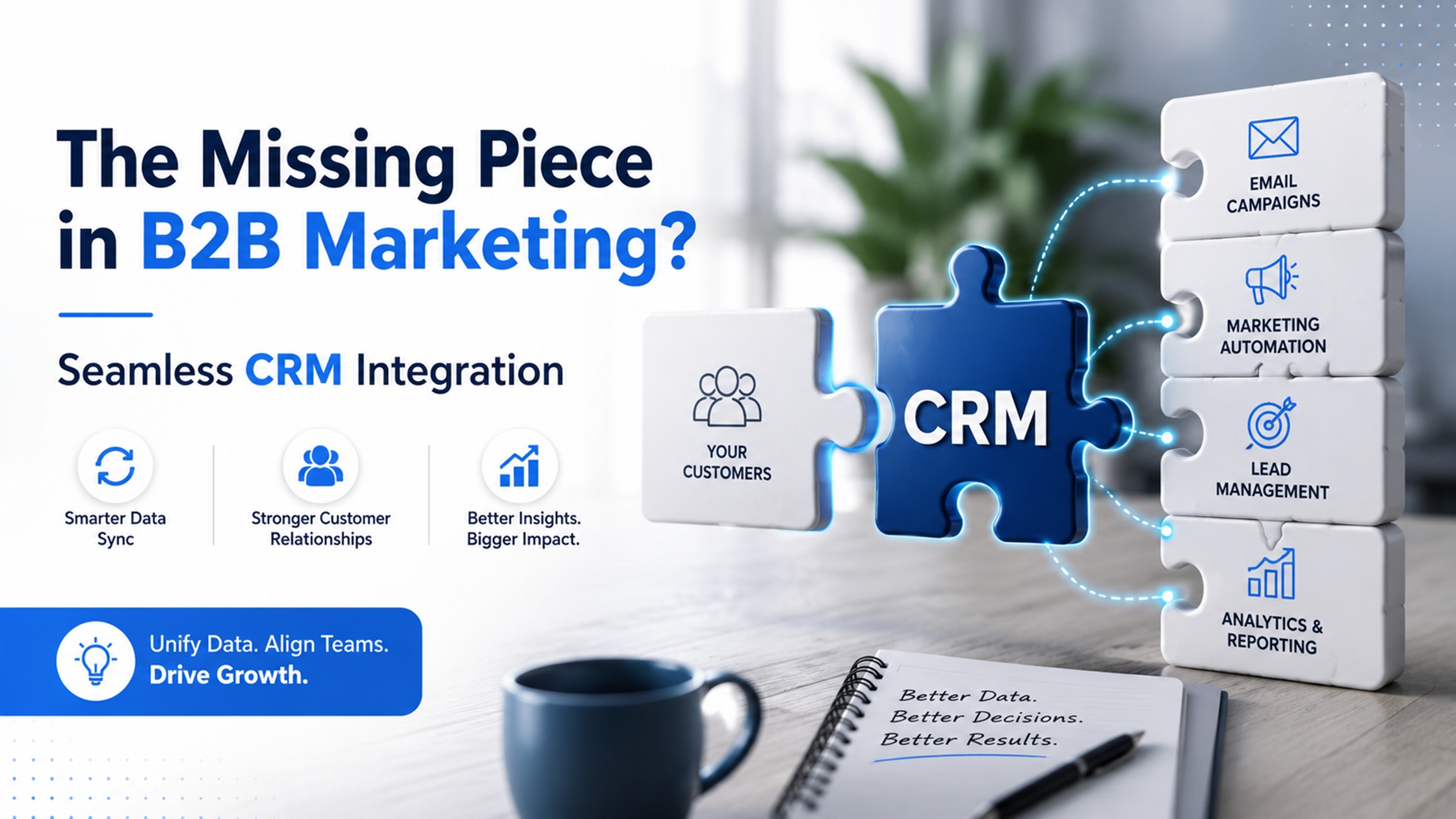
In the fast-paced world of B2B marketing, businesses are constantly on the hunt for that elusive edge. Amidst a sea of strategies and tools, one critical component often gets overlooked: CRM integration. As companies strive to create personalized experiences and nurture long-lasting relationships, seamless integration between Customer Relationship Management (CRM) systems and marketing efforts becomes essential.
Picture this: your sales team armed with real-time insights into customer behavior, preferences, and pain points. Marketers can craft campaigns tailored specifically to those insights. When these two worlds collide harmoniously through effective CRM integration in B2B marketing, you unlock unprecedented opportunities for growth and engagement.
But what does it really mean to integrate CRM into your marketing strategy? And how can it help overcome some common challenges faced by B2B marketers today? Let’s dive deeper into this game-changing topic that could redefine your business’s success in an increasingly competitive landscape.
The Importance of CRM Integration in B2B Marketing
CRM integration in B2B marketing is essential for creating a cohesive strategy. It connects various touchpoints along the customer journey, enhancing communication and collaboration.
With integrated CRM systems, businesses can access real-time data. This information empowers teams to make informed decisions that drive sales and engagement.
Personalization becomes much easier with CRM integration. Marketers can tailor their messages based on customer behavior and preferences, leading to improved conversion rates.
Moreover, seamless integration streamlines processes across departments. Sales, marketing, and customer service align efforts more effectively when they share a unified platform.
The ability to analyze performance metrics also increases significantly. Companies can track ROI from campaigns accurately, allowing for continuous improvement in strategies.
In an increasingly competitive landscape, effective CRM integration provides the edge needed to foster long-term relationships with clients while boosting overall efficiency.
Challenges of Integrating CRM into B2B Marketing Strategies
Integrating CRM into B2B marketing strategies presents several challenges that companies must navigate.
First, data silos often hinder smooth integration. When information is trapped in different systems, it’s difficult to create a cohesive strategy. This fragmentation leads to inefficiencies and missed opportunities.
Another obstacle is user adoption. Employees may resist new tools or processes, especially if they are accustomed to traditional methods. Training and support become crucial yet can be overlooked during implementation.
Furthermore, aligning CRM functionalities with specific business needs is essential but complicated. Not all CRMs offer features tailored for every industry or company size.
Ensuring data accuracy poses a significant hurdle. Inaccurate data not only skews insights but also affects customer relationships negatively over time. Addressing these challenges requires strategic planning and ongoing commitment from the entire organization.
Solutions for Seamless CRM Integration
To achieve seamless CRM integration in B2B marketing, companies should start by selecting the right tools. Opt for platforms that offer robust APIs and support third-party integrations. This flexibility ensures smooth data transfer across systems.
Next, invest in training your team. A knowledgeable staff can leverage CRM features effectively, enhancing user adoption rates and overall performance.
Data quality is paramount. Regularly cleanse and update your databases to minimize errors during integration. Accurate data fosters better insights for targeted campaigns.
Automation also plays a crucial role. Utilize automated workflows to streamline processes, reducing manual tasks while increasing efficiency.
Consider ongoing support from vendors or consultants specializing in CRM solutions. Their expertise can guide you through complexities, ensuring the system aligns with your business goals seamlessly.
Future Outlook and Trends in B2B Marketing and CRM Integration
The future of B2B marketing is set to be increasingly defined by advanced CRM integration. Artificial intelligence and machine learning will play crucial roles in personalizing customer interactions. Businesses will harness these technologies to analyze data patterns, optimizing strategies for targeted outreach.
Enhanced automation tools are also on the horizon. They promise streamlined workflows that improve efficiency across teams, from sales to marketing. This means faster response times and more effective lead nurturing processes.
Furthermore, as companies embrace omnichannel strategies, seamless CRM systems will become essential. Marketers need comprehensive insights that span various platforms to create cohesive experiences for their prospects.
Data privacy concerns are likely to shape how businesses approach CRM integration too. Transparent practices around data usage will foster trust and compliance with regulations while still driving engagement through personalized content.
Staying ahead in B2B marketing requires a commitment to leveraging cutting-edge technology and evolving consumer expectations thoughtfully.
Conclusion
The landscape of B2B marketing is evolving rapidly. Seamless CRM integration has emerged as a vital component for businesses aiming to stay competitive and responsive in this dynamic environment. By understanding the importance of CRM systems, addressing integration challenges, and implementing effective solutions, companies can enhance their marketing strategies significantly.
As technology continues to advance, we can expect further innovations that will simplify CRM integration in B2B marketing. Staying ahead of these trends not only improves customer engagement but also drives overall business growth. As organizations increasingly recognize the value of data-driven insights, those who prioritize seamless CRM integration will undoubtedly have an edge in fostering lasting relationships with clients.
Embracing this strategic approach could be the key differentiator that unlocks new opportunities and propels your business toward success in an ever-changing marketplace.
 Previous post
Choose a Right Website Developer
Previous post
Choose a Right Website Developer