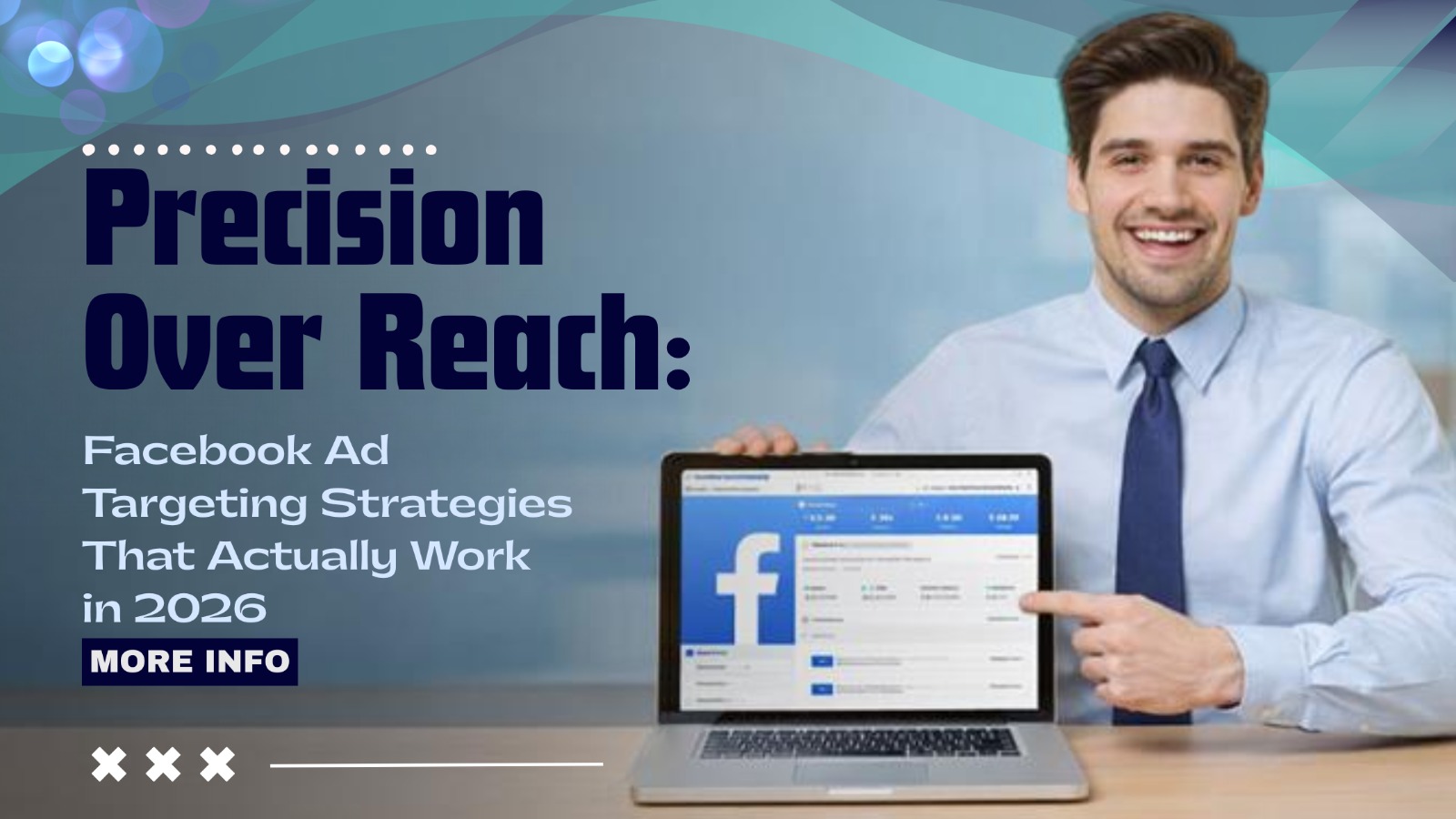
Precision Over Reach: Facebook Ad Targeting Strategies That Actually Work in 2026
In 2026, Facebook ad targeting strategies are no longer about reaching the largest possible audience—they’re about reaching the right one. As competition intensifies and user expectations evolve, broad campaigns often fall short, delivering impressions without meaningful engagement. Today’s high-performing ads are built on precision, using data and behavior insights to connect with users who are most likely to convert.
Marketers are now prioritizing relevance over volume, leveraging advanced AI tools, refined audience segments, and privacy-conscious data to craft smarter campaigns. This shift toward precision not only improves engagement but also maximizes ad spend. In this blog, we’ll explore how focusing on the right audience can transform your Facebook advertising results and drive measurable growth.
The Importance of Targeting in Facebook Ads
Targeting is the backbone of effective Facebook ads. Without it, your campaigns can miss their mark entirely.
When you aim for a broad audience, your message often gets lost in the noise. Precision targeting helps to cut through that clutter and connect with those who are genuinely interested in what you offer.
By honing in on specific demographics, interests, and behaviors, businesses can create more relevant ads. This relevance translates to higher engagement rates and better conversion outcomes.
Moreover, targeted ads maximize budget efficiency. Instead of spending money on uninterested users, funds go toward individuals likely to take action.
Successful Facebook ad targeting fosters deeper connections between brands and consumers. It transforms advertising from a generic approach into personalized experiences that resonate profoundly with potential customers.
Common Mistakes in Ad Targeting
Many advertisers underestimate the importance of understanding their audience. A common mistake is targeting too broadly, which dilutes the effectiveness of your message. When you cast a wide net, you might reach many people but fail to connect with anyone.
Another frequent error involves ignoring demographic insights. Relying solely on interests or behaviors can lead to wasted ad spend. Understanding age, gender, and location helps refine who sees your ad.
Additionally, neglecting data analysis post-campaign can be detrimental. Failing to review performance metrics means missing out on valuable lessons for future campaigns.
Some marketers overlook the power of retargeting audiences that have already engaged with their brand. Not re-engaging these prospects means leaving potential conversions on the table while focusing efforts elsewhere.
Precision Over Reach: The Key to Successful Ad Targeting
When it comes to Facebook ad targeting, precision is paramount. Casting a wide net may seem tempting, but it’s not always effective. An audience that isn’t genuinely interested will lead to wasted budgets and poor engagement rates.
Focusing on specific demographics can yield much better results. By honing in on interests, behaviors, and location, you create a tailored experience for potential customers. This targeted approach fosters authenticity and connection.
Moreover, personalized ads resonate deeper with audiences. They feel relevant and timely rather than intrusive or generic. When users see content that speaks directly to their needs or desires, they are more likely to respond positively.
Testing different combinations of targeting parameters is essential too. A/B testing allows marketers to refine their strategies continuously. With each campaign iteration, businesses can gather valuable insights that drive smarter decisions moving forward.
Advanced Targeting Strategies for Different Business Goals
To maximize the effectiveness of Facebook ad campaigns, tailoring your targeting strategy to specific business goals is essential. For brand awareness, consider using broader demographics and interests. This approach helps you reach a larger audience while generating buzz.
For lead generation, leverage interest-based targeting combined with behavioral data. This allows you to connect with users who are more likely to engage with your offerings based on their online activity.
When focusing on sales conversions, implementing retargeting strategies can be powerful. By re-engaging users who have previously interacted with your content or website, you can guide them further down the sales funnel.
If customer loyalty is your aim, utilize engagement custom audiences. Target those who have already shown interest in your brand but need that extra nudge to make repeat purchases or sign up for loyalty programs. Each strategy should align seamlessly with specific objectives for optimal results.
Utilizing Custom Audiences and Lookalike Audiences
Custom Audiences are a powerful tool for advertisers. They allow you to connect with users who have already engaged with your brand. This could be through website visits, app usage, or even interactions on social media.
Creating these audiences is straightforward. Simply upload your customer data to Facebook, and the platform will match it with user profiles. This enables highly targeted campaigns aimed at people familiar with your brand.
Lookalike Audiences take this strategy further. By analyzing the traits of your existing customers, Facebook can identify new potential clients who share similar characteristics.
This approach expands your reach while maintaining relevance in targeting. It’s an effective way to attract high-quality leads that are more likely to convert into sales.
Utilizing both Custom and Lookalike Audiences maximizes ad spend efficiency and bolsters engagement rates across campaigns.
Predictions for Future Facebook Ad Targeting Trends
As we look toward the future, Facebook ad targeting strategies are bound to evolve significantly. Enhanced artificial intelligence will play a pivotal role in refining audience segmentation. Brands may leverage machine learning algorithms that analyze user behavior more deeply than ever before.
Privacy regulations will continue shaping how data is collected and used. Expect more emphasis on consent-driven targeting methods, which prioritize transparency and user trust.
Another trend on the horizon is hyper-localization of ads. Businesses could target audiences based on real-time location data, offering personalized promotions tied to specific geographical areas.
Additionally, integration with augmented reality (AR) might change how users interact with ads. Imagine trying products virtually through your feed before making purchasing decisions—a game-changer for engagement rates.
The ongoing shift towards video content will also influence targeted strategies as platforms favor dynamic visual storytelling over static images or text-based ads.
Conclusion
Mastering Facebook Ad Targeting Strategies can significantly boost your advertising success. The landscape is constantly evolving, and it’s crucial to adapt your tactics accordingly. Precision in targeting allows you to connect with the right audience at the right time, leading to higher engagement rates and conversion potential.
Avoid common pitfalls by focusing on detailed demographic information, interests, and behaviors rather than casting a wide net. This personalized approach will make your ads more relevant and appealing.
Advanced strategies like utilizing Custom Audiences and Lookalike Audiences enable you to refine your ad campaigns further. Tailoring content based on actual user data fosters stronger connections with potential customers.
As we look ahead, staying attuned to emerging trends in Facebook ad targeting is vital for maintaining competitive advantage. Embrace innovation while holding onto core principles of precision over reach.
By implementing these targeted strategies now, you’re setting up a framework for future success in an ever-changing digital marketing environment. Adaptability combined with strategic focus promises a bright outlook for brands willing to invest time into honing their Facebook Ad Targeting Strategies effectively.
 Previous post
Choose a Right Website Developer
Previous post
Choose a Right Website Developer