
Why WordPress Needs a Three-Layer AI Strategy to Stay Competitive
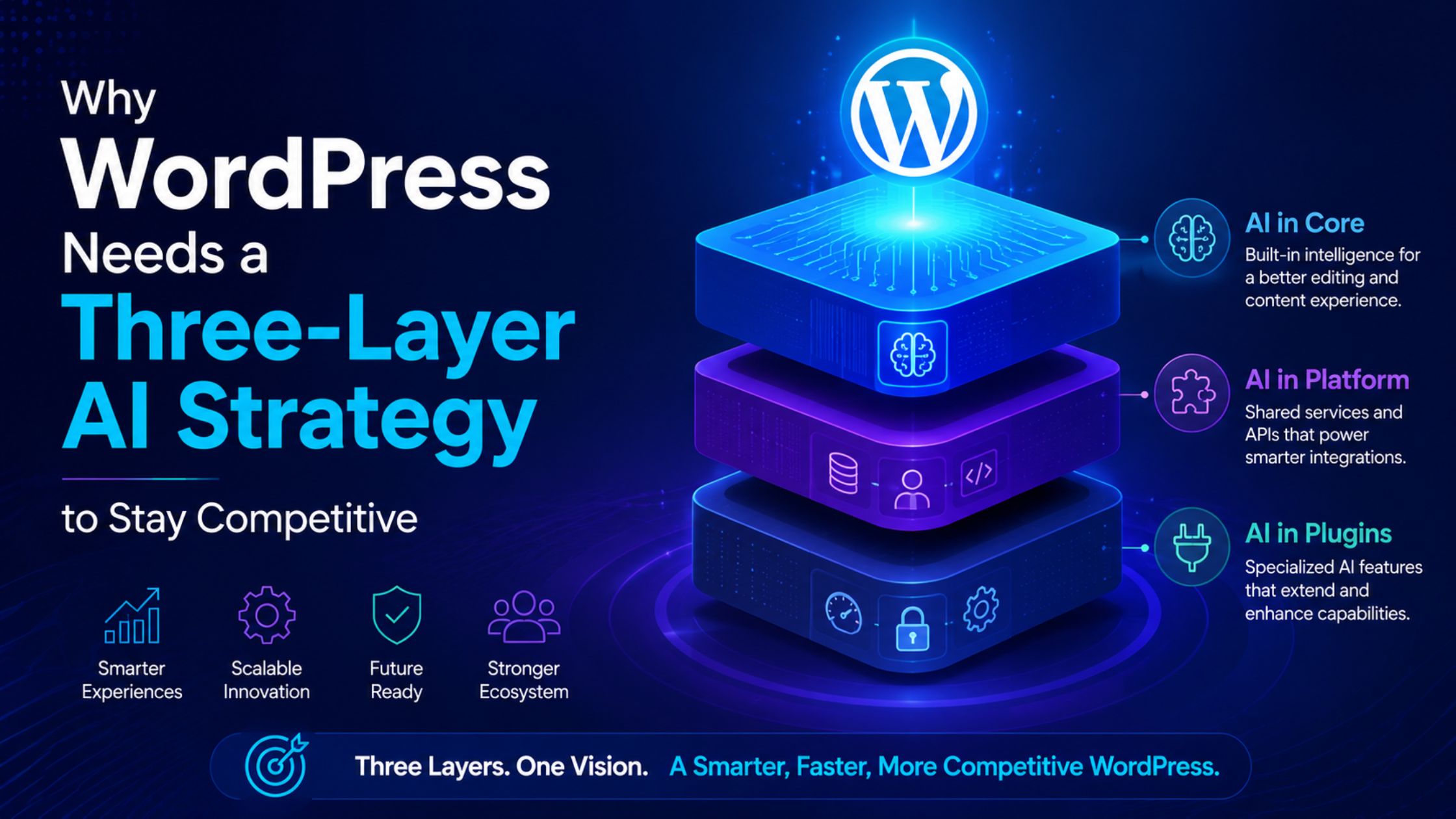
WordPress has always been a popular tool for building websites, and it powers more than 40% of all websites online. Its easy-to-use features and flexible design have made it a favorite among bloggers, businesses, and developers. But as technology changes quickly, WordPress needs to keep up to stay useful and competitive. Artificial intelligence is changing many industries, and WordPress can’t afford to fall behind. AI is already making a big impact in different areas, it’s important for WordPress to adopt a smart plan that improves its main features and uses powerful tools and plugins. This blog looks at why a three-layer AI strategy—focusing on Core, Platform, and Plugin approaches—is key to helping WordPress stay ahead in a tough market. Let’s explore how this plan can make WordPress even more powerful and versatile.
Current State of AI Integration in WordPress
WordPress has made strides in AI integration, but the journey is just beginning. Currently, various plugins are leveraging machine learning to enhance user experience and streamline processes. From SEO optimization tools to content generation assistants, the landscape is evolving.
Yet, many users still rely on traditional methods for site management. The existing solutions often lack cohesion between core functionalities and third-party integrations.
This fragmentation means that while some features shine brightly, others remain underutilized or even overlooked entirely. For instance, intelligent chatbots help improve customer engagement but may not fully integrate with other crucial aspects of website performance.
Additionally, AI capabilities can sometimes feel like an afterthought rather than a strategic focus within WordPress development. As the platform continues to grow globally, a more structured approach toward integrating AI could unlock its true potential for users at all levels.
Benefits of Implementing a Three-Layer AI Strategy in WordPress
Implementing a three-layer AI strategy brings numerous advantages to WordPress. First, it enhances user experience across the board. By leveraging AI at the core level, websites can offer personalized content tailored to individual visitors.
Next, platform-level integration fosters seamless compatibility with various tools and services. This streamlines workflows for developers and site owners alike.
On the plugin side, specialized features powered by AI can automate tasks like SEO optimization or content generation. These plugins reduce manual effort while boosting efficiency.
Moreover, this layered approach allows for greater scalability. As new technologies emerge, each layer evolves independently without disrupting the others.
Data-driven insights become more accessible through this framework. Enhanced analytics help users make informed decisions about their website strategies and growth potential.
What Happens When Core, Platforms, and Plugins Lose Clear Roles
When the roles of core, platforms, and plugins blur in WordPress, chaos often ensues. Developers may find themselves duplicating efforts, leading to inefficiencies. With overlapping functionalities, user experiences can become cluttered and confusing.
This lack of clarity can frustrate users looking for streamlined solutions. Instead of enjoying seamless integrations, they encounter conflicts among various components. The result? Increased support tickets and diminished trust in the ecosystem.
Moreover, innovation stagnates as teams focus on patching up existing issues instead of exploring new features. Without defined boundaries between core functions and additional features offered through plugins or platforms, creativity is stifled.
A disorganized environment makes it harder to attract new developers too. Talented individuals seek projects with clear architectures where they can contribute meaningfully without wading through tangled codebases that offer little guidance or consistency.
Recommendations for Implementing a Three-Layer AI Strategy in WordPress
To effectively implement a three-layer AI strategy in WordPress, start by defining clear objectives for each layer—core, platform, and plugins. This ensures that all elements work together cohesively.
Next, prioritize user experience. Utilize AI to enhance site performance through personalized content recommendations or smarter search functionalities. Users appreciate seamless interactions.
Invest in training resources for developers to understand AI capabilities fully. Workshops on machine learning can foster innovation within the community.
Encourage collaboration between core developers and plugin creators. Sharing knowledge will lead to more robust solutions that benefit everyone involved.
Continually evaluate the effectiveness of implemented strategies with metrics and feedback loops. Regular assessments help adapt the approach as technology evolves and user needs change rapidly.
AI in WordPress: Today’s Setup Compared to the Ideal Framework
Today’s use of AI in WordPress is made up of many new tools and features. But it feels more like a collection of separate parts than a well-planned system.
Right now, most of the AI is added through plugins that give extra functions. However, these plugins don’t work smoothly with the main system. This creates a confusing experience for users and misses chances to use data better.
A better way would be to have AI built into every part of WordPress — the core, the platform, and the plugins — so they all work well together. This would let the system suggest content that matches what users are doing, based on their actions everywhere.
Also, more automation could help with tasks like writing posts and improving search engine visibility. In short, even though there have been improvements in using AI in WordPress, there is still a lot of potential to create a more organized system that connects these different parts smoothly.
The Bottom Line
WordPress is at an important stage in its growth. As the internet becomes more crowded, using a strong plan for AI will be key to staying relevant and improving how users experience websites. A three-layer plan—Core, Platform, and Plugin Strategies—gives a clear way to move WordPress forward.
By clearly setting the purpose of each layer, WordPress can use AI to make websites faster, help create content more easily, and make user interactions more personal. This plan helps developers and also improves the experience for website owners and visitors.
Right now, AI is being added to WordPress, but it’s not connected well across the Core, Platforms, and Plugins. Using a well-organized plan will make sure each part works together instead of clashing or repeating tasks. This also helps reduce the risks of depending too much on one part.
By carefully using this three-layer approach for AI in WordPress, the platform can stay a top choice for building websites and encourage new ideas from its users and contributors. Taking this plan seriously now can lead to better features in the future—so it’s important for everyone involved to work together within this clear structure.
 Previous post
Choose a Right Website Developer
Previous post
Choose a Right Website Developer