Smart Website Promotion Strategies: Advanced Internet Marketing Techniques That Deliver Results
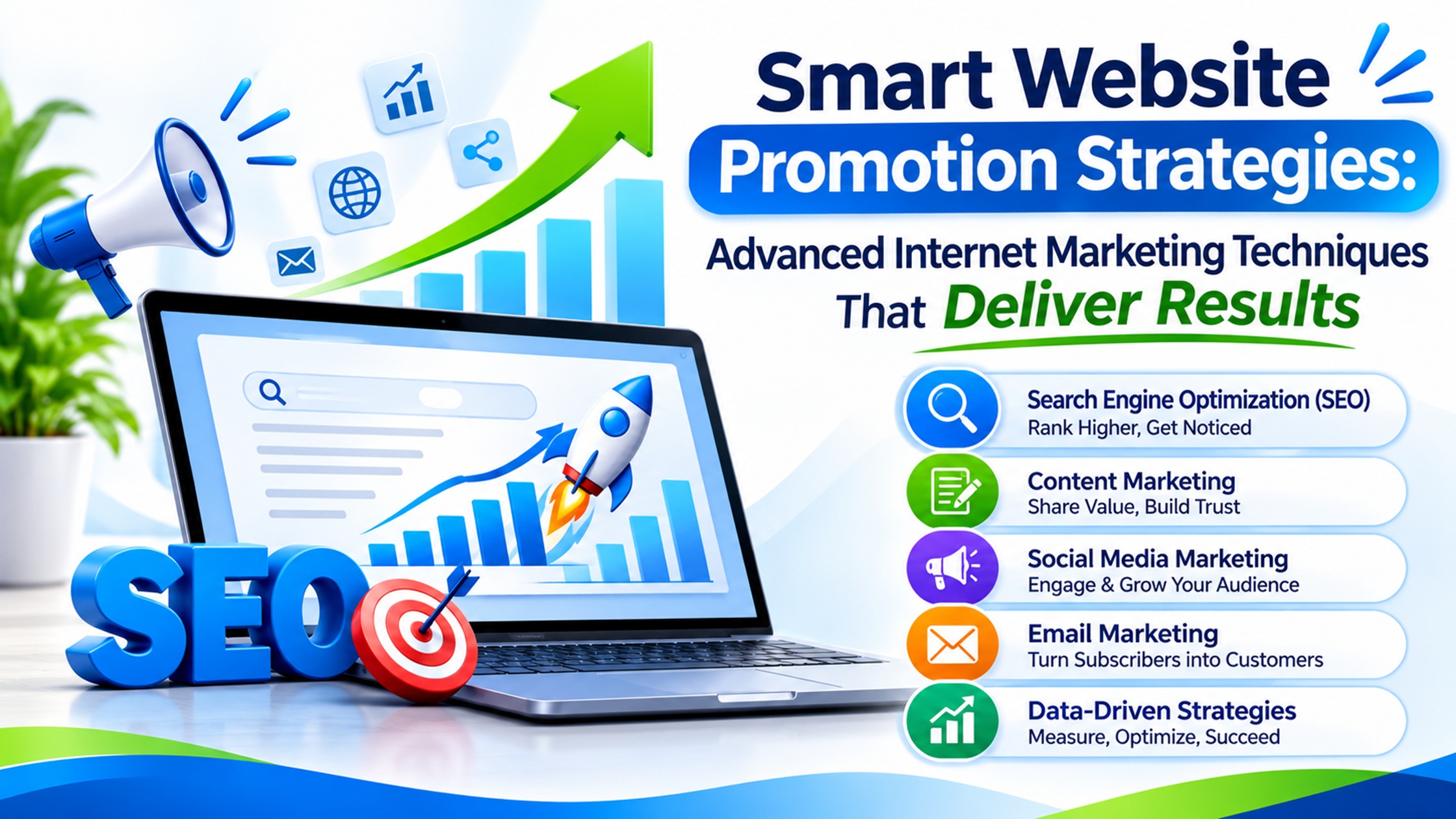
In today’s competitive online marketplace, simply launching a website is not enough to attract customers and grow a business. Companies need a well-planned promotional strategy to reach their target audience, improve search visibility, and generate consistent leads. This is where advanced Internet Marketing Techniques play an important role. By combining search engine optimization, content marketing, social media engagement, paid advertising, and data-driven strategies, businesses can strengthen their online presence and achieve measurable results.
Website promotion is no longer limited to publishing content or running advertisements. It requires understanding customer behavior, identifying the right marketing channels, and delivering valuable experiences across multiple digital platforms. Whether you operate a startup, an eCommerce store, or an established company, adopting modern promotional strategies can help you attract relevant visitors and turn them into loyal customers.
Let’s explore some effective strategies that can take your website promotion efforts to the next level.
1. Strengthen Your Website with Advanced SEO Strategies
Search engine optimization (SEO) remains one of the most effective ways to promote a website organically. A well-optimized website has a better opportunity to appear in relevant search results and attract visitors who are actively looking for your products or services.
However, modern SEO requires more than inserting keywords into website content. Businesses should focus on creating useful, relevant, and technically sound websites.
Some important SEO practices include:
- Keyword Research: Identify relevant keywords based on search intent, competition, and audience requirements.
- On-Page SEO: Optimize page titles, meta descriptions, headings, URLs, images, and internal links.
- Technical SEO: Improve website speed, mobile usability, crawlability, indexing, and structured data.
- Content Optimization: Publish informative content that answers users’ questions and solves their problems.
- Link Building: Earn relevant backlinks from trustworthy websites to strengthen your website’s authority.
Businesses should also monitor search performance regularly and update existing content to maintain its relevance.
2. Use Content Marketing to Build Authority
Content marketing is a powerful website promotion strategy because it helps businesses educate their audiences while establishing industry credibility. Instead of focusing entirely on selling products or services, companies can provide valuable information that encourages visitors to explore their websites.
A successful content marketing campaign can include:
- Informative blog articles and industry insights.
- Detailed service and product guides.
- Case studies and customer success stories.
- Educational videos and tutorials.
- Downloadable eBooks and practical resources.
- Frequently asked questions and knowledge-based articles.
For example, a web development company can publish articles about website security, responsive design, website performance, and emerging development technologies.
Consistently publishing high-quality content can improve organic visibility, encourage social sharing, and create opportunities for earning backlinks.
Pro Tip: Focus on addressing specific customer challenges rather than producing content only to target search keywords.
3. Leverage Social Media for Website Promotion
Social media platforms provide businesses with opportunities to connect with potential customers, increase brand awareness, and drive referral traffic.
Platforms such as Facebook, Instagram, LinkedIn, YouTube, and Pinterest can support website promotion when used strategically.
To achieve better results, businesses should:
- Share website articles, product updates, and useful resources.
- Create short-form videos and engaging visual content.
- Participate in relevant industry discussions.
- Use platform-specific hashtags where appropriate.
- Encourage followers to visit relevant website pages.
- Collaborate with industry experts and content creators.
LinkedIn can be particularly useful for B2B companies, while Instagram and Facebook can help businesses reach broader consumer audiences.
The key is to select platforms based on audience behavior instead of maintaining accounts on every available social network.
4. Invest in Pay-Per-Click Advertising
Organic promotion takes time, while paid advertising can help businesses reach potential customers more quickly. Pay-per-click (PPC) advertising allows companies to display advertisements across search engines and other digital platforms.
Google Ads, Microsoft Advertising, and social media advertising platforms provide different targeting options to reach specific audiences.
Some effective PPC strategies include:
- Targeting high-intent commercial keywords.
- Creating dedicated landing pages for advertising campaigns.
- Testing different advertisement headlines and descriptions.
- Using remarketing to reconnect with previous website visitors.
- Monitoring conversion rates and advertising costs.
- Excluding irrelevant search terms through negative keywords.
PPC campaigns should be evaluated based on business outcomes rather than clicks alone. Tracking leads, sales, and customer acquisition costs helps businesses understand whether their advertising investments are delivering value.
5. Explore Email Marketing and Marketing Automation
Email marketing remains a valuable channel for building customer relationships and encouraging repeat website visits. It allows businesses to communicate directly with subscribers who have shown interest in their products, services, or content.
Companies can use email marketing to share:
- New blog posts and industry updates.
- Product launches and special announcements.
- Exclusive offers and promotional campaigns.
- Educational newsletters and helpful resources.
- Personalized recommendations.
Marketing automation can make these activities more efficient. Businesses can create automated welcome emails, follow-up sequences, abandoned-cart reminders, and lead-nurturing campaigns.
For better engagement, divide subscribers into relevant groups based on their interests, preferences, and previous interactions.
Always obtain appropriate consent and provide a clear unsubscribe option.
6. Optimize Your Website for Mobile Users
Mobile optimization is an essential part of modern website promotion. A significant share of online browsing happens through smartphones and tablets, making mobile usability an important consideration for businesses.
A website that performs poorly on mobile devices can frustrate visitors and increase the likelihood that they will leave without taking action.
Consider these optimization practices:
- Implement responsive website design.
- Improve mobile page loading speed.
- Use readable fonts and appropriate spacing.
- Make navigation simple and intuitive.
- Create mobile-friendly contact and inquiry forms.
- Ensure buttons and clickable elements are easy to use.
Google primarily uses the mobile version of website content for indexing and ranking. Therefore, businesses should ensure that their mobile websites provide the same important content and functionality as their desktop versions.
7. Use Video Marketing to Increase Engagement
Video marketing has become an effective way to communicate complex information, demonstrate products, and build customer trust.
Unlike traditional text-based content, videos can present information in a visual and engaging format. Businesses can use videos to introduce their services, explain product features, answer common questions, and share customer testimonials.
Some useful video marketing ideas include:
- Product demonstrations.
- Step-by-step tutorials.
- Company introductions.
- Customer testimonial videos.
- Industry expert interviews.
- Short educational videos.
- Behind-the-scenes content.
Videos can be published on YouTube, embedded into relevant website pages, and shared across social media platforms.
Adding descriptive titles, relevant captions, transcripts, and supporting text can also improve accessibility and help search engines understand the video content.
8. Apply Conversion Rate Optimization (CRO)
Attracting website traffic is only one part of successful digital promotion. Businesses must also encourage visitors to take meaningful actions, such as submitting an inquiry, requesting a quotation, booking an appointment, or completing a purchase.
Conversion Rate Optimization (CRO) focuses on improving website elements to increase the percentage of visitors who complete desired actions.
Effective CRO strategies include:
- Creating clear and compelling calls to action.
- Simplifying website navigation.
- Reducing unnecessary form fields.
- Displaying genuine customer reviews and testimonials.
- Improving landing page content.
- Testing different headlines and page layouts.
- Identifying and fixing user experience issues.
A/B testing can help businesses compare different versions of website elements and understand which variations perform better.
Even small improvements to landing pages can contribute to better conversion performance over time.
9. Implement Influencer and Affiliate Marketing
Influencer and affiliate marketing can expand a brand’s reach by connecting businesses with established audiences.
Influencer marketing involves collaborating with content creators who have relevant followers and can introduce products or services to potential customers.
Affiliate marketing, on the other hand, allows partners to promote business offerings through unique referral links and earn commissions for qualifying sales or leads.
Businesses can benefit from these strategies by:
- Partnering with relevant industry influencers.
- Working with niche content creators.
- Developing attractive affiliate programs.
- Providing promotional resources to partners.
- Tracking referral traffic and conversions.
- Measuring campaign performance.
The most important factor is choosing partners whose audiences align with the business’s target customers. Relevance and credibility often matter more than follower count.
10. Monitor Website Performance with Analytics
Successful website promotion requires continuous measurement and improvement. Without proper analytics, businesses may struggle to understand which marketing channels are generating meaningful results.
Tools such as Google Analytics 4 and Google Search Console can provide valuable insights into website traffic, user engagement, search visibility, and conversions.
Businesses should regularly monitor:
- Organic search traffic.
- Referral and social media traffic.
- Landing page performance.
- User engagement and conversion events.
- Search queries and keyword performance.
- Lead generation and sales.
- Returning visitor behavior.
Use these insights to identify successful campaigns, improve underperforming pages, and allocate marketing budgets more effectively.
Data-driven decision-making allows businesses to refine their promotional strategies instead of relying on assumptions.
11. Optimize for AI-Powered Search and Answer Engines
Search behavior is evolving as users increasingly interact with AI-powered search experiences and answer engines. Businesses should consider how their content can provide clear, trustworthy, and useful information for both traditional search engines and AI-driven discovery platforms.
Some practical approaches include:
- Answering specific customer questions directly.
- Using descriptive headings and logical content structures.
- Publishing original insights and expert explanations.
- Including relevant statistics and credible references.
- Maintaining accurate business information.
- Strengthening author expertise and content credibility.
- Using structured data where appropriate.
There is no guaranteed method of appearing in AI-generated answers. However, publishing reliable, well-organized, and genuinely useful information can improve the overall discoverability and value of a website.
Common Mistakes to Avoid in Website Promotion
Even businesses with good marketing budgets can struggle when their promotional activities lack proper planning.
Here are some common mistakes to avoid:
- Targeting irrelevant keywords: Attracting visitors who have no interest in your offerings rarely generates meaningful business results.
- Ignoring mobile users: A poor mobile experience can negatively affect engagement and conversions.
- Publishing low-quality content: Repetitive or unhelpful articles provide little value to audiences.
- Overlooking website performance: Slow-loading pages and technical problems can discourage visitors.
- Ignoring analytics: Without performance tracking, businesses cannot accurately evaluate campaign effectiveness.
- Expecting immediate SEO results: Organic growth requires consistency, quality, and ongoing optimization.
- Using the same strategy everywhere: Each marketing platform has different audiences, formats, and engagement patterns.
Avoiding these mistakes can help businesses build a more sustainable website promotion strategy.
Conclusion
Successful website promotion requires a combination of creativity, technical expertise, audience understanding, and continuous optimization. From SEO and content marketing to PPC advertising, email automation, video campaigns, and AI-powered search optimization, businesses have numerous opportunities to strengthen their digital presence.
The most effective Internet Marketing Techniques are those that align with specific business goals and customer expectations. Rather than investing in every available promotional channel, companies should identify the strategies that deliver relevant traffic, meaningful engagement, and measurable conversions.
Start by evaluating your website’s current performance, identifying improvement opportunities, and implementing the right promotional activities. With consistent effort and data-driven decisions, your website can become a valuable platform for attracting customers, generating leads, and achieving long-term business growth.
 Previous post
Choose a Right Website Developer